


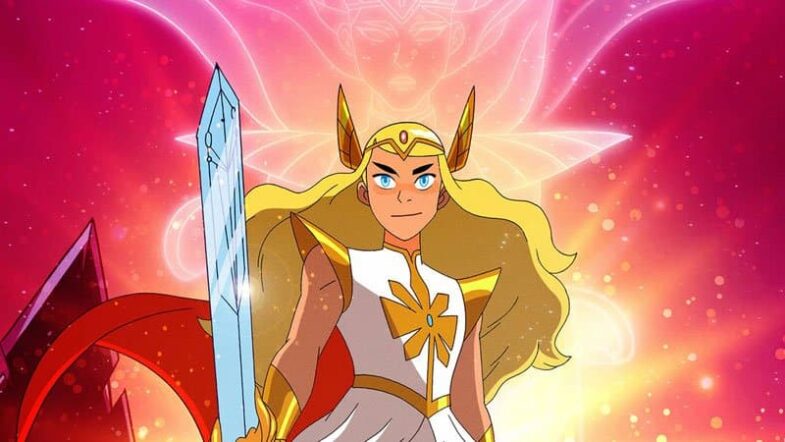
If you read the title and you haven’t start to foam at the mouth yet, read it again. Friends, we are finally discussing She-Ra and the Princess of Power, and all of its glory, during Pride Month, no less. I call this fate!
I came across this brilliant show while binge-watching Avatar (another brilliant show) and the trailer left my mouth open. I quickly devoured each season and was astounded by the layers of diversity, beautiful character arcs, strong female characters, and heartwarming LGBTQ love stories. I’ve never been more proud to be apart of a fandom! Although it’s only a cartoon, She-Ra has done more for representation across various demographics than some movies or non-animated shows.
So today, we’ll be looking at the brilliance that is She-Ra and the Princess of Power, its impact on diversity, intersectionality and LGBTQ storytelling, and lastly, why we need it more than ever right now.
Now, read this article with caution: season finale spoilers may lay ahead.
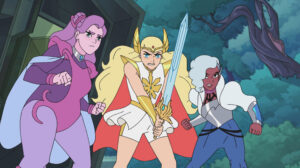
Right away, what blew me away was the princesses: they weren’t girls waiting to be saved, instead, they were the fierce warriors fighting back. They’re courageous, brave, and supportive of one another until the very end. The princesses come in a wide array of races, ethnicities, ages, and sexual orientations.
I remember growing up watching Disney movies and unable to see myself physically represented in their princess lineup; but in season one, She-Ra shook the table. I saw myself in Mermista, Entrapta, Glimmer, and Netossa. The fact that I had all these options still blows my mind.
Executive producer Noelle Stevenson casually sets the scene for audiences to witness princesses dating boys, but dating other princesses too, as well as the normalization of relationships such as Adora and Catra, Scorpia and Perfuma, plus Netossa and Spinnerella.
Although all three couples had amazing moments in season five, seeing Netossa and Spinnerella reclaim the spotlight was amazing! Being the show’s first queer couple and ending the show with them was incredibly fitting. To see amazing representation not only for LGBTQ+ members, but for POC within the LGBTQ+ community, it was a breath of fresh air.
Not only are LGBTQ relationships accepted, but everyone remembers the correct pronouns! This could be seen with the character Double Trouble who’s non-binary. Noelle Stevenson created a space that’s inclusive and furthermore, how the real world should be.
Honestly, the crown jewel of She-Ra is Adora’s relationship with Catra. (Catradora shippers make some noise!). What’s beautiful about their relationship is how organic and relatable it is. Adora is essentially your average girl who wants to save her friends and her home, but that becomes possible when she has Catra’s love and support. The turmoil from their constant fighting through seasons 1-4 has been leading to not only their romantic union, but a pretty impressive redemption arc for Catra. (Prince Zuko would be proud.)
In the last episode, Adora’s willingness to sacrifice herself to save her friends while Catra remains by her side, is a true depiction of their bond. To see their relationship and the plethora of others in a kid’s show was not only amazing, but it made me hopeful for the future of LGBTQ+ representation.
She-Ra has taught so many amazing life lessons in just five seasons, whether it be “vulnerability is powerful,” “we’re stronger together,” or just simply the act of acceptance. I remember the discrimination and unjust backlash The Legend of Korra received and feared the same fate for She-Ra, but I’m so happy to see the complete opposite. For this Pride Month and every month after, let’s be kinder towards one another!
Happy watching and Happy Pride!
Featured Image via ComingSoon