


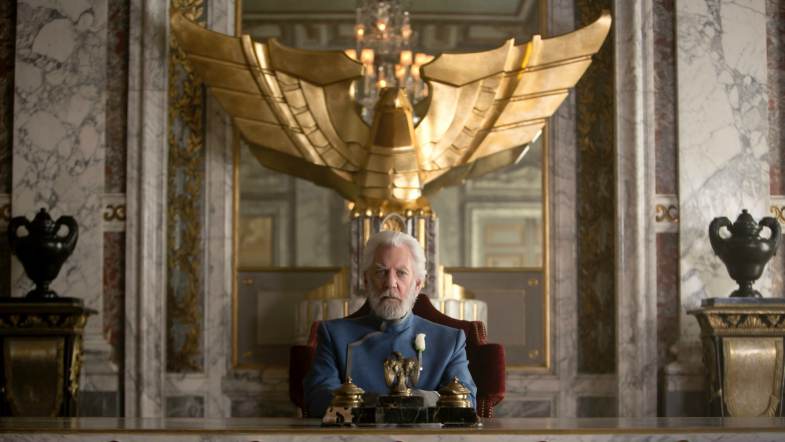
Dystopian young adult has struck a chord with viewers and readers everywhere. There is an established trend in young adult literature, one that usually pits a rag-tag group of teens against the adults who run their respective dictatorships. A slew of books and movies like The Maze Runner, Divergent, The Fifth Wave, and The Giver, have arrived hot-on-the heels of the smash-hit franchise, The Hunger Games, proving that this trend is here to stay. But is it a welcome development in the YA genre?

In a scathing 2011 op-ed, Washington Post writer Meghan Cox Gordon railed against the increasingly dark content of YA, claiming that publishers and writers were irresponsibly saying anything goes when it came to the rules of the genre. The article received a lot of push-back, but I believe Gordon raised some necessary points. Young adult is a new and amorphous genre, so the boundaries are a little ill defined. I’d be the last person to prevent young readers from exploring the taboo. Reading above your level as a child is an invaluable thrill, and I think what constitutes YA material should be an ever-expanding concept. Until, that is, kids stop liking it.

Image courtesy of Amazon
It’s usually said that YA fiction targets readers between the ages of 15-20. Now, people are welcome to read what they like. I know plenty of parents who shamelessly read The Hunger Games and The Maze Runner alongside their middle-school children, and I have a few friends who read it recently. Like I said, reading up and exploring darker stuff is a must for any young reader. The superfluous blood and gore of my favorite childhood series would have made my parents cringe. It’s not violence in YA that I take issue with. It’s the themes. And in dystopian YA, the themes are boring.
Political oppression is the through-line with all these books. They tend to take place in grim autocracies, whose inhabitants seem to have lost any sense of humor along with their basic human rights. Tonally, these things are extremely dry. The characters are rendered totally stoic by their harsh predicaments. There’s hardly a smile or laugh to be had while reading, which robs the young adult reader of one of the greatest pleasures of reading as a kid: the feeling that you are experiencing an adventure with them. Most of the conversations are droning, and almost invariably include strategic discussion about the hard logistics of a revolution.

Image courtesy of www.moviefone.com
I need to point out that I am NOT saying we should raise a generation of politically uninformed youngsters. I think children should be taught to believe that an understanding of politics is essential to being an inhabitant of the modern world. But think back to your early teen years. Without a decent understanding of world history, how receptive do you think you would be to these thinly-veiled allegories? Literature shouldn’t be riling up generations of twelve-year old’s for a political-revolution. It should get them thinking about what kind of adult they want to be, and the values they hold dear.
We all get more than an earful of political discourse on the average day. Politics is clunky, loud, inherently divisive, very necessary, but overall, boring. The subject rarely makes for lasting, unbiased literature. Reading up on world issues, being an informed citizen, that’s just homework for taking up space in the world, and nobody likes homework. Especially kids.
Featured image courtesy of Lyle’s movie files