Disgruntled ‘GoT’ Fans Aim to Make Amends With Charitable Petitions (Raising Over 125K)
But first, aN Analogy Imagine building an igloo—a structure strong enough to withstand the full weight of an undead polar bear. All you have are your hands and a machete. Entrenched within the projected perimeter of your home, you begin crafting and stacking bricks with the snow available at your feet. As the walls of your igloo get higher and higher, the world around you begins to disappear. All you can see is the inside of your igloo. It is only when the work is complete that you can cut a door with your now worn machete and reenter the …
Imagine building an igloo—a structure strong enough to withstand the full weight of an undead polar bear. All you have are your hands and a machete. Entrenched within the projected perimeter of your home, you begin crafting and stacking bricks with the snow available at your feet. As the walls of your igloo get higher and higher, the world around you begins to disappear. All you can see is the inside of your igloo. It is only when the work is complete that you can cut a door with your now worn machete and reenter the world. Once outside, you take a deep breath and exhale before preparing to turn around and feast your eyes upon your labor…it’s a mess—lopsided and uneven. To top it all off, the pretentious Eskimo next door built an igloo twice as big and immaculate—making yours look like a mistake.
I didn’t just open with that because, this article, first and foremost is a GoTarticle (Why aren’t there igloos beyond the wall?), but also because igloo construction is very similar to the creative process/storytelling (bare with me, I think I’m going somewhere with this). It’s an isolated, monotonous, (often disappointing) stacking of bricks. Creating anything is work, and in order go to work we have to wake up in the morning.
Image Via Winteriscoming.net
We all do it, we hit the snooze button. Maybe we even stumble into the kitchen and put the kettle on before miserably staggering back to our pillows. Dubious when that alarm goes off again (and again…).The air becomes laced with the smell of cheap coffee and it’s time to wake up. There’s a whole day ahead of us. Some of us have meetings, calls, sales pitches, others work up a sweat. In the shop or on-site: we create, build, and get shit done—all in the face of anxiety, fear, and doubt. At the end of the day, we distract ourselves from the stress of reality with, more often than not, narratives; sometimes we forget that the people crafting those stories endure the same daily struggle.
Image Via Winteriscoming.net
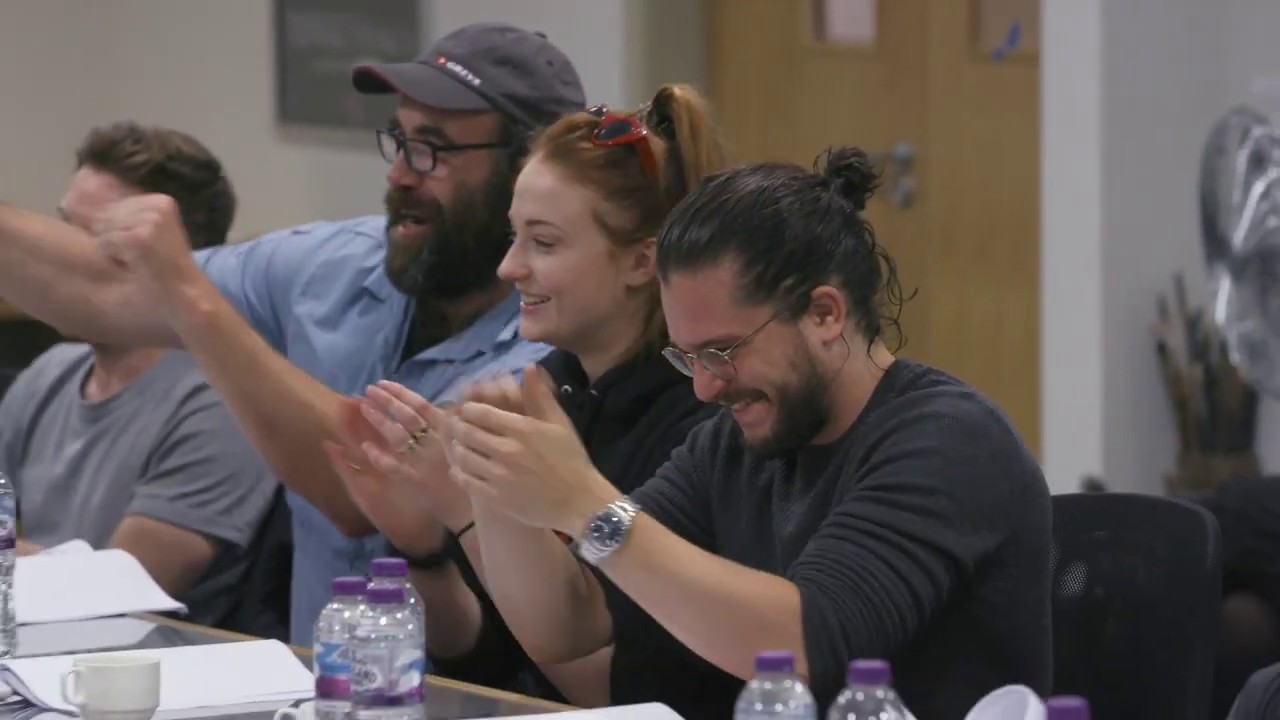
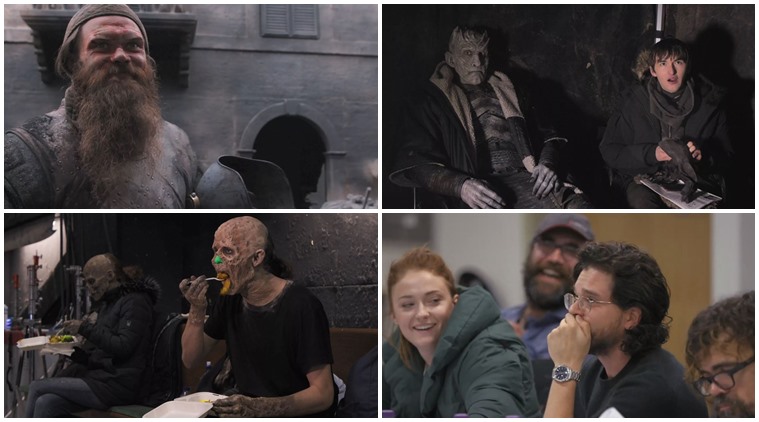
While the workers who are shown in HBO’s documentary Game of Thrones: The Last Watch may not have always worked up a sweat building the finale season of GoT (because it’s cold in Belfast), they definitely worked their asses off. The insightful documentary (somehowfilmed in secret by the brilliant filmmaker Jeanie Finaly) shows us the not so glamorous side of storytelling. The monotonous part laced with the smell of burnt grounds and riddled with the minding-numbing nanoseconds that exist between one task and the next.
Perhaps the brainchild of some clever foresight, the well-placed doc offers GoT fandom a refreshing/ jarring reminder of hard work. We see gruelling shifts that keep loved ones from seeing their families inhabited by people who would’ve otherwise remained nameless. Big names like David Benioff, D.B Weiss, Emilia Clarke, and Kit Harrington aren’t given nearly as much screen time as people like the delightfully quirky Vladimir Furdik (Night King) and the endearingly class clown-esque Andrew McClay—a Stark soldier who deserves his own spinoff.
Image Via Indianexpress.com
Fans have been hard on the final season of Game of Thrones(myself included). The story didn’t live up to everyone’s expectations—but it is, in no form the fault of the men and women who gave their days and nights to create it. I think everyone knows this and the fandom has finally achieved civil equanimity. Last week, after various cast members bashed a petition that called for a rewrite of Season 8(which gained a staggering amount of signatures), another petition was formed; one aimed towards reconciliation.
Image Via Tvguide.com
A lot of fans were unhappy with Daenerys’ character arc; however, that doesn’t mean they have harbored any ill-will toward the woman who so skillfully brought the character to life in the first place. Instead of signing a petition to rewrite the season, fans are now fundraising to support Emilia Clarke’s charity, SameYou—an organization that funds programs and research aimed towards the betterment of brain injury and stroke recovery.
The fundraiser was started by Reddit user ella_ellaria (who has identified herself as Sarah) under the subreddit r/freefolk and has now raised over 100 thousand dollars. The petition was started within the same community that birthed the more vindictive petition. The angel to the aforementioned demon claims the latter wasn’t meant to gain such destructive traction.
“Since the tongue-in-cheek nature of that petition has flown over a lot of people’ heads, to the point that it’s prompted backlash from some of the cast, we wanted to show that Game of Thrones fans appreciates the hard work of the incredible cast & and crew despite their constraints.”
Image Via Newyorker.com
Emilia Clarke’s charity comes after she wrote a personal essay for The New Yorker revealing to the world that she suffered two life-threatening brain aneurysms while working on the earlier seasons of Game of Thrones. Clarke kept doing her job even though “every minute of every day [she] thought [she] was going to die.” It was her strength and occupational integrity that prompted the fundraiser. Supporters are now hashtagging #WeStandByDaenerys.
The Mother of Dragons had this to say about the fundraiser via Instagram:
With the help of the internet’s deluded deification, sometimes people just write at the expense of others. We objectify and ridicule… It’s great that we hold our stories to such a high standard, but stories, communication, is about bringing people together—reminding each other that we share the same pain and experiences. You are not alone.
The truth is, your neighbor’s igloo isn’t bigger or better than yours—it’s the same size. That “pretentious” Eskimo woke up the same way in order to build it. If critique becomes malicious (even of our own work), well, then we’ve lost sight of why we starting building in the first place: we needed a place to live.