



The first step is to write the book. Now that you’ve done it, rewrite it. Now reread it and write it again. Its word shuffle, but not as fun.
Because you’re going to keep repeating over and over again.
When you’ve written it and you’ve waited a week and you’ve read it again and find there’s nothing left you can do to improve it, then you’re ready to start the first step in publishing it.
Now of course you can self-publish it, but if you want to follow the greats and secure a traditional publisher, then you have to start querying. Yes, before you learn about rejections and how to deal with them, you have to query. What is querying?

Image Via Writing Classes
Thanks to Gotham Writers, we were able to see a panel where authors…

Image Via Brooklyn Book Festival
…Seth Fried, author of The Municipalists…

Image Via American Libraries Magazine
…Kody Keplinger, author of A Midsummer’s Nightmare…

Image VIa Harper Collins
…and Joselin Linder, author of The Family Gene, addressed the very topic of querying.
To make this information digestible, we’ve separated this handy-dandy advice in various sections. Scroll down to find what you need, but we advise you read the whole thing. Not only may it help you find your blind spots, but we put a lot of time and effort in this article.
WHAT A QUERY LETTER IS
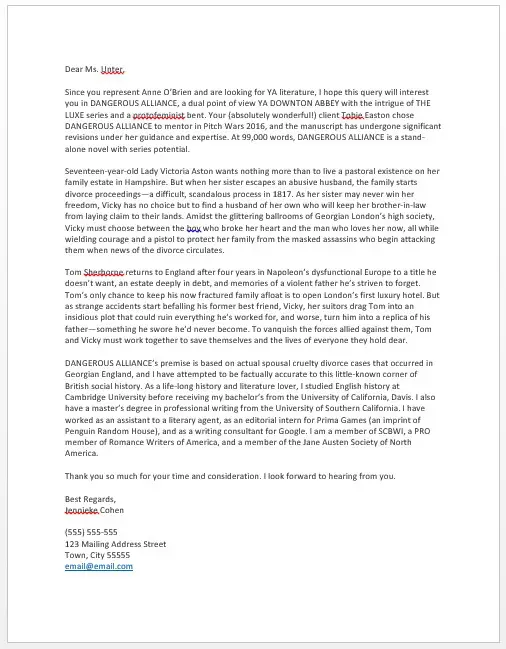
Image Via Ignited Ink Writing LLC
It is a business format. This is a business letter, but you’re also showing off your skills as a writer.
Before you get published, you have to get a literary agent. To get a literary agent, you have to query them by sending them, you guessed it, a query letter.
To start, a query letter is a one-page letter sent to literary agents that’ll get them excited about your potential-book. It should have them go, “Ah! There’s a story I’d like,” and then they request the full manuscript. From there, if they like the manuscript and believe it can make some cash, they’ll sign you, edit it, and send it to a publishing housing.
Querying is the first step.
THE FORMAT
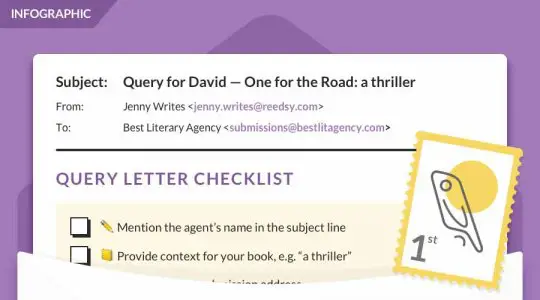
Image Via Reedsy Blog
Your address should be on the top right of the page. On the top left of the page, the agent’s address.
Note that if you’re not mailing your letter, then you don’t have to worry about the above, but you definitely have to worry about everything that’s about to come next.
Use a personalized greeting to acknowledge the agent. Don’t call them “Sir” or “Madam” or “To Whom it May Concern.” If you’re addressing “Donald Agent,” call them “Mr. Donald Agent,” unless their guidelines say otherwise (We’ll get to those in a bit).
The body of your query letter should be between three to five paragraphs.
Paragraph #1: This is your opportunity to hook the literary agent. Share any connection you have with the agent (you met him or her at a conference, or you’re a fan of specific authors that he or she represents). If you don’t have a connection, then get to the action. Tell them the title and genre of your book. Tell them the word count. Give them what they want.
Paragraph #2: Now you got to summarize your story. Here’s three pieces of advice we got at the panel:
1- “Studying jacket copies is a good idea”
Take cues from The Great Gatsby. It promises money! Jazz! Who wouldn’t want to read a book with money! And jazz!?
2- The reader should be able to “get” the character in one sentence. An example would be, “It’s about the principal of the thing. After all, she doesn’t like him… much.”
Just make sure that you keep the tone consistent with your writing style. You don’t want to sell your agent on your humor and then have them read a depressing thriller.
3- “Treat them like puzzles”
Pick apart the manuscript to its most basic components. You’re taking an 80,000+ word book and paring it down to about, at most, 300 words. You hear that? Your 80,000+ word book has to be pared down in about 300 words. This won’t be easy, but it’ll showcase your talents as a writer.
Paragraph #3: Add your bio, but make sure it’s relevant to writing. Impress your agent with writing awards, your street cred, what you’ve published, but make sure it’s no more than two sentences.
Now you have to make sure this whole thing is one page. Make sure this thing has short, easy-to-understand sentences. This thing is going to be one of hundreds of letters, and your potential-agent is probably going to skim through it.
QUERYING-THE PROCESS
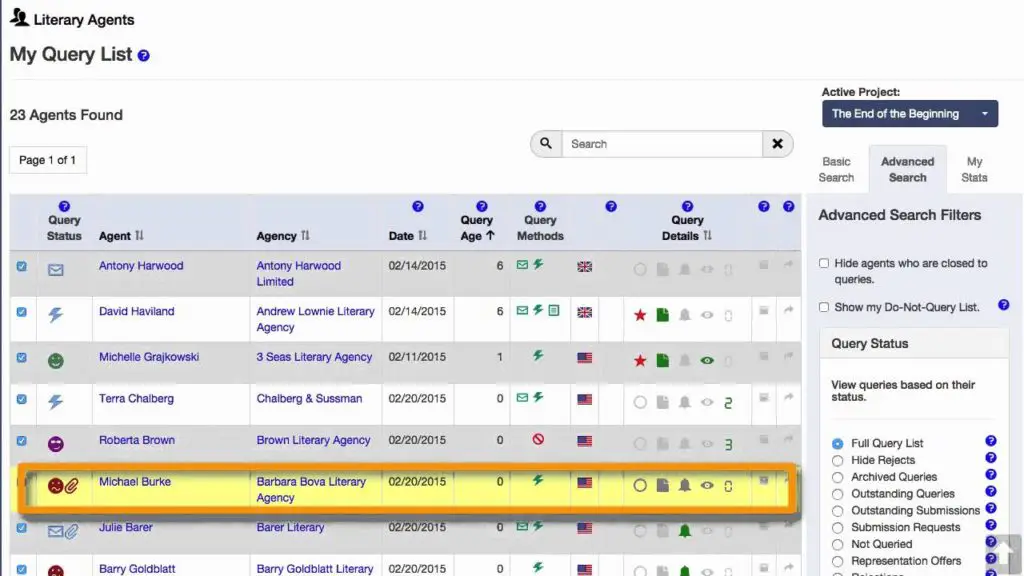
Image Via Youtube
Behold the wonders of https://querytracker.net/
With this you can find the right agent quick and easy. Plus, it’s free! Yes, there is a Premium version where you can get more specific search criteria, but if you’re on a budget this is the site for you.
Go through your favorite books, your favorite authors, and find out who their agents were. That’s a start, but don’t get hung up on one agent. Your book might shine out better at a smaller agency. Make sure you do your research.
“Don’t lie.”
Agents follow up on what you tell them. Don’t tell them someone recommended you when they didn’t, they’ll check up on that. And make sure you actually read those books that you tell them you read.
Submit thoughtfully, and query widely y’all.
“Query widely” does not mean give every agent, or even a large group of agents, the same query letter. That’s how you get your query letter in the spam box. Instead, one should tailor their query letter to the agent they are sending them to too. That extra step encourages the agent to take an extra step when looking over your letter.
If you’re writing fiction, don’t talk about the trends in the market, or about the target audience. Sell the story. Unless you’re writing nonfiction, but that’s its own separate beast.
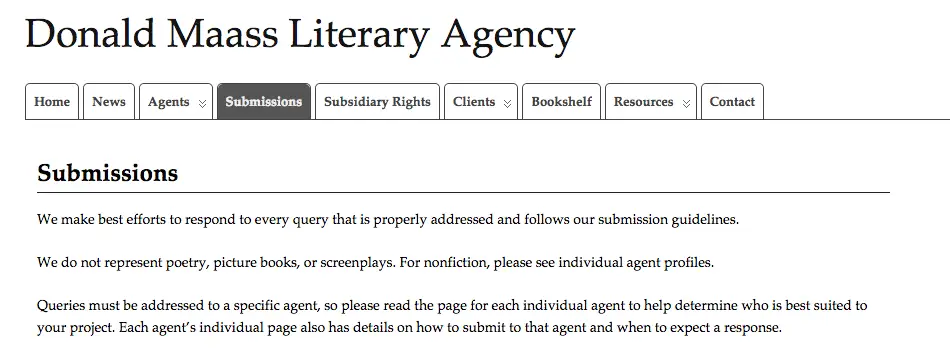
Image Via NY Book Editors
Remember that the best query letter is one that follows these things which are called submission guidelines. Each agency has their own requirements for query letters. Find them and follow them.
ADVICE
“No one wants your great ideas.”
This is from Joselin Linder, and it’s important to remember that. Yes, you’re giving them a summary of your book and I get it, you’re protective of your book, but don’t be paranoid. No one can duplicate your voice so don’t get worried.
Unless…

Image Via Variety
But odds are you don’t have a clone. Also:
“Things move quickly. You are easily replaced.”
If they ask for x, you have at most 2 days to get back to them.
Also, if you fired the agent who has previous sold your books, or just your first book, you might want to put down that you “parted ways.”
Remember that they only know as much as you tell them.
And for all those who think this is too much work and would rather just self-publish, remember you’re going to have crank out books constantly just to maintain your audience.
LAST THOUGHTS
You want to get published and if, God willing, it happens, maybe it’ll be like when Kody Keplinger got her first book published…

Image Via American Libraries Magazine
It was due out in November, but her birthday was in August. Her agent said they should go out for a birthday dinner with her mother.
At the dinner, Kody, her mother, and her literary agent sat down. Birthday dinner!
Then her agent gave her a present.
Kody unwrapped it…
…and…
It was her book. Her agent had gotten an early copy of the book and gave it to Keplinger for her birthday!
That could be you. Or you could be like Seth Fried…

Image Via Brooklyn Book Festival
“I’m a live by moment guy… after any amount of success I feel like I’m going to be arrested.”
Either way, you’ll never know until you query. So now that you know what to do, have at it! But you’re probably going to get rejected, a lot, so here are tips on how to handle that.
Featured Image Via Ask Leo!