


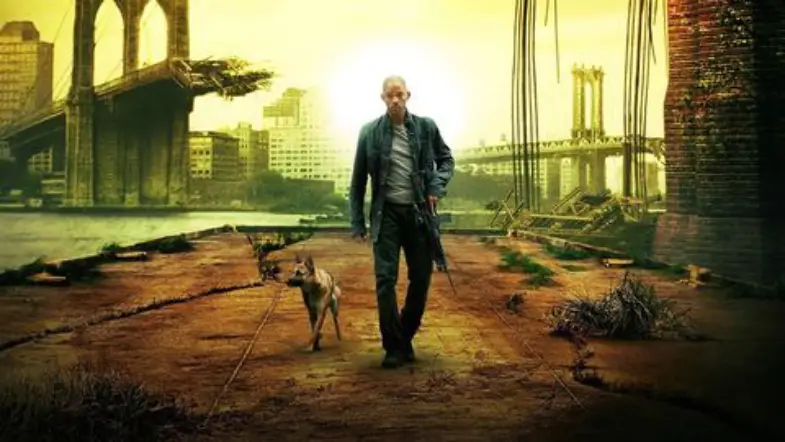
It’s a general rule that the book is always better than the film adaptation, and Will Smith’s I Am Legend is no exception, based on the novel by Richard Matheson of the same name. Directed by Francis Lawrence, the 2007 movie ended with Robert Neville sacrificing himself to save the cure for the virus that turned most of humanity into nocturnal mutants, which was an ending that, in my opinion, ruined the movie. In the final scene we see Anna, another survivor immune to the virus, and her young son Ethan take the serum to a military camp in Bethel, New York, implying that they will mass produce the cure and save humanity, which is all fine and good, but did you know that there was an original ending? One that not only emulated the tone of the original novel, but would have surpassed it as a far superior telling of the same story.
The alternate ending of I Am Legend was considered “controversial” to test audiences, mainly because Will Smith was portrayed as a bad guy. In both endings, a horde of mutants lay siege against Robert Neville’s house, and he retreats into his basement laboratory and seals himself in with the female mutant test subject behind a plexiglass wall. In the theatrical release, he discovers that he was able to develop a cure from the incapacitated mutant, and sacrifices himself so that Anna and Ethan, who were taking shelter with him, could take it to safety.
In the alternate endings, however, Neville comes to discover that, the Alpha Male, the mutant leading the charge against his laboratory was only doing so to rescue the female he had been experimenting with. He then opens the plexiglass wall and comes to face the Alpha Male, who he sees with tears in its eyes. He apologizes, and watches as it picks up the female mutant in its arms and leaves with the rest of his clan.
Neville, looking at the dozens of photographs of mutants he killed experimenting on, comes to realize that the mutants are far more social and intelligent than he initially believed, and that he has become the new monster, the boogeyman of this new civilization, a legend no different than the vampires or werewolves that steal away unsuspecting victims in the night.
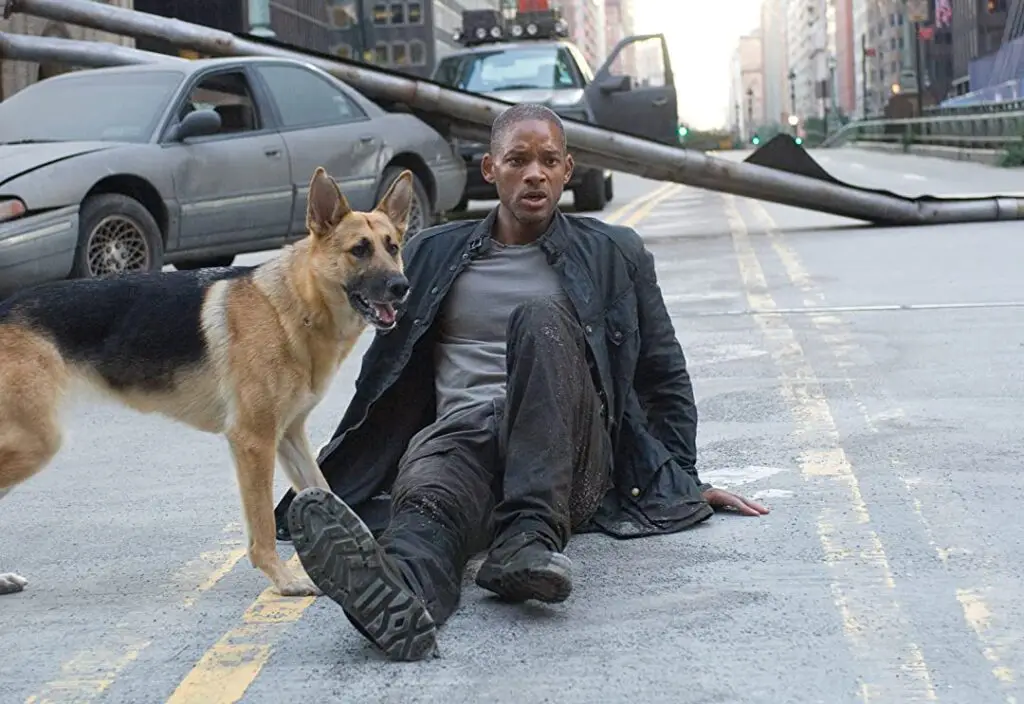
This ending is far superior than the one released in theaters, turning an uninspired Hollywood action film into almost a thought-provoking piece about what it means to be human. But the book asked the same question, so how does this make the movie better? While Richard Matheson does clearly intent to end his 1954 book with the same philosophical weight, to me, it doesn’t have nearly the same impact.
In the book, a suppressant for the virus has already been created without Robert Neville’s knowledge, allowing the infected to live lifestyles almost identical to what they’ve lived before (the only difference being that they still can’t expose themselves to sunlight). The problem with this is that Neville is virtually no different than this new race, yet they still capture and publicly execute him for supposedly being the world’s new monster. It doesn’t make any sense. It doesn’t make the reader compare Neville to the ghouls and goblins that humanity feared lurked in the dark corners of society, but the alternate film ending does. If only it was the one we saw in theaters!