



When you think of science fiction literature, who comes to mind? Probably H.G Wells, Isaac Asimov, Jules Verne and Arthur C. Clarke, right? They’re regarded by many as the founding fathers of science fiction, and rightfully so, but you’d be lying if you told me that you didn’t notice a certain “similarity” among them all.
Now before I continue, I’d like to stress that I’m not invalidating their talents as authors or their contributions to the science fiction genre just because they’re all white men. There’s a reason why their work is so pervasive in our modern day culture, which is why I’d like to shed some light on a lesser known science fiction author that’s drastically different from the rest: Octavia E. Butler.
I say lesser known, because it’s very likely that you have heard of her before – I sure haven’t until recently – and I say drastically different from the rest because she was a black woman. You may be asking yourself, “Why is that so important? It’s not as if the quality of an author’s work is dependent on their skin color, right?” Right, and Octavia isn’t necessarily a better author than Wells, Asimov, Verne and Clarke, but it’s by virtue of her skin color that she’s able to bring something different.
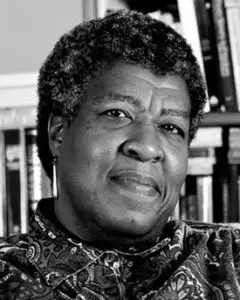
Let me elaborate. Artists create what they’ve experienced, and people who look similar will live, to an extent, similar lives, and I think it’s because of this that, to me, the science fiction genre has exhausted itself creatively long ago. I’m not saying that Octavia hasn’t used the common conventions of the genre in her work, such as time travel, alien races and dystopian futures, but she wrote about them with a fresh and unique perspective.
For example, her 1979 novel Kindred follows a young black woman writer named Dana who finds herself repeatedly pulled back in time from her Los Angeles home in 1976 to a plantation in pre-Civil War Maryland. There, she quickly learns that it is her mission to save the life of the white plantation owner that will rape her great-grandmother, because if she doesn’t, she herself will cease to exist. This grim ethical dilemma forced Dana to confront the ongoing trauma of slavery and sexual violence against black women.
Dana is also married to a white man named Kevin, who accidentally travels back in time with her when he’s holding onto her. When she’s pulled back to the present without him, he’s stuck in the past for five years, showing just how unconscious he had been to the benefits he derived from his skin pigmentation in the present.
In the past, he has to resist accepting slavery as the normal state of affairs but also dissociate himself from the unrestricted power white males enjoy as their privilege, transforming himself from a naïve white man, oblivious to racial issues, to an anti-abolition activist, fighting against racial equality.
Kindred was also praised for its depiction of slaves and slave communities. The skin color of these characters were treated as “a matter of course,” and Octavia resisted the temptation that so many white authors have of incorporating African Americans in their narratives just to illustrate a problem. In Kindred, however, the slave communities are depicted as a rich human society, composed of individuals with their own personalities and characteristics, as opposed to a faceless collective just to serve as the oppressed class.
Kindred is just one of many examples as to how Octavia’s blackness was able to introduce something exciting and new to the science fiction genre. In an essay she first published in Transmission Magazine in 1980, Octavia asked why science fiction was so white, and instead of concluding that the problem was due to some inherent racism, she instead attributed it to us as creatures of habit: we get comfortable with the way things are and don’t like it when they change, but this is the antithesis of what the science fiction genre has always dealt with.
Science fiction has always been used as a platform to discuss change, from technological change to societal change, which is why it is so ironic that science fiction itself has changed so slowly. This is why diverse authors in science fiction are so important, so we can read unique and different stories talking about unique and different ethical issues.
Featured Image via Space.com