


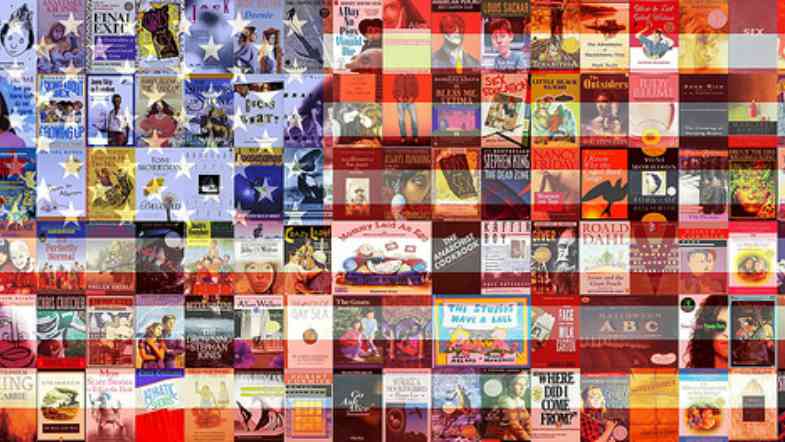
There’s an unfortunate trend of boycotting literature among western universities, that has developed in recent years. All across America and Europe, liberal arts schools are striking books from curriculum for a variety of reasons. Sometimes it is because of an author’s objectionable personal beliefs. Other times it is because the book is seen to propagate bigotry. These decisions are generally made by faculty, borne out of a commitment to social justice, and an attempt to challenge dominant narratives and foster an inclusive environment for minority voices.

The stated goals seem worthwhile, but one has to wonder whether the means are effective. Consider two extreme examples. Marquis De Sade was a French Enlightenment philosopher, and probably the most controversial thinker in Western history. In one essay, he argues for the allowance of incest, rape, and murder in French society. The guy was so screwed up, the word sadist is actually a play on his last name. Take another controversial author: Adolf Hitler. He articulated much of his philosophy of eugenics and Nazism in his pseudo-memoir, Mein Kampf. So here are two highly objectionable thinkers. If there were ever two writers to ban, it’s these guys. So why read them?
Three words: Know. Your. Enemy. The sole purpose of higher education is to equip young people with the intellectual weaponry to combat bad ideas. You can’t combat those bad ideas if you don’t know what they are, and how they have been applied throughout history. In politically tense times such as ours, this is absolutely imperative.

Image courtesy of Pinterest
In other instances, staff and students omit certain texts that are deemed classics, in favor of more contemporary work. Again, this is generally borne out of a commitment to diversity, as much of what we regard as classic literature was penned by European elites.
Again, this seems to be a misguided approach to a worthwhile goal. It misattributes the source of literature’s diversity problem. The dissident and minority voices in literature found a way to smash the glass ceiling by taking queues from their predecessors.

Image courtesy of Gradesaver
A wise man once said: “You have to know the rules in order to break them.” It’s a vague idiom, but I think most have an implicit understanding of what it’s getting at. The idea is that one can’t expect to be greatly innovative or radical with no sense of tradition. The only way groundbreaking artists are able to break every rule in the book, is by reading the whooooole darn thing.
The reason Langston Hughes was able to write such inventive poetry infused with jazz and blues, was because he knew for sure no one had ever done it. Paradoxically, his Harlem Renaissance compatriot, Countee Cullen, wrote exclusively in an Early Romantic style, and was not a fan Hughes’ work.
If universities don’t start encouraging students to read everything they can get their hands on, we risk sending out legions of elites into the world, who do not know the rules they are trying to break. Those receiving a higher education are going to have their hands on the levers of power, so it is imperative they not fall prey to the myth that one should not read something out of principle. No one, in the history of the human race, was ever made smarter, for having not read a book.
Featured image courtesy of Blunderbuss