


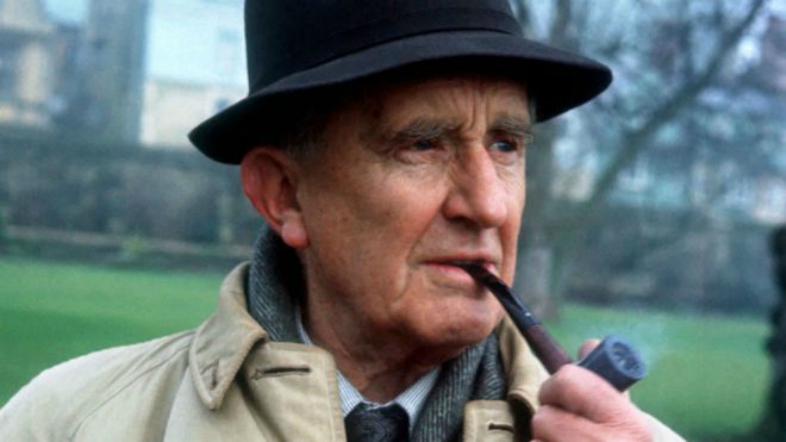
J.R.R. Tolkien served as a lieutenant during World War I. Thrust from his contented life as a newlywed and recent college graduate, he was conscripted to serve as a fighter in the Battle of the Somme, one of the bloodiest battles in human history. The battles left him emaciated and shellshocked, a small fortune by comparison – as he later wrote, “by 1918 all but one of my close friends were dead”.
The war, and how it haunted Tolkien thereafter, has an almost-mythological meaning to Middle-earth fans. The Fall of Gondolin, the first story set inside the fantasy universe, was written while Tolkien was recovering in a hospital after being deemed too unfit for battle. Much of his early works, contained in The Simarillion and The Book of Lost Tales, were written as a therapy of sorts, helping Tolkien acclimate back to English life.
“It was obviously a searing experience,” Simon Tolkien, the author’s grandson, told The Guardian. “Frodo is a real war veteran – when he comes back after what he’s been through, he is in an actual sense like a world war one veteran. He’s not there any more. He’s grown old before his time, and this is what happened to them. It made all these young men, so fresh-faced and eager, old before their time.”
None of this is lost on committed readers, much less lawyer-turned-writer Simon. No Man’s Land, his fifth novel, is not only dedicated to J.R.R., but parallels his forced coming-of-age from Oxford student to pawn in a war game. The story follows a young man in his many efforts to escape impoverished misery, from the drudgery of a miner’s union to a clandestine marriage to the sink-or-swim encounters with death on the battlefield. The book was released late last month, just before the centennial of the Battle of the Somme on July 1st.
Not only has he been a missionary advocate of his grandfather’s legacy (he broke ranks with his father to lend his insight to the original Lord of the Rings films), but he has also been a student of it. Simon has been writing for more than 15 years, but avoided ever reaching into war fiction – an endeavor sure to produce comparisons – until he was ready.
“I grew up free of war but not the fear of it, and I often thought about the experience of young men like my grandfather who exchanged the world they knew for the horrors of the trenches where they faced the prospect of their own extinction when they were ordered ‘over the top’,” Tolkien said. “I wanted to know what it was like for them and this book is the end result of my long search to answer that question.”
Featured image courtesy of Relevant Magazine.