



I am always on the lookout for books to add on my ever-growing TBR pile! I follow bookstagrammers, publishers, lifestyle coaches, and add as many books that catch my fancy as I can. But there is one person who makes me want to put my TBR pile on the side and read all the books that he has recommended, and that someone is Bill Gates! I wait for his book recommendations at the end of the year like a hawk waiting on its prey.
This year has been a lousy year but Gates has some recommendations that will blow your mind.
He says, “In tough times—and there’s no doubt that 2020 qualifies as tough times—those of us who love to read turn to all kinds of different books. This year, sometimes I chose to go deeper on a difficult subject, like the injustices that underlie this year’s Black Lives Matter protests. Other times I needed a change of pace, something lighter at the end of the day. As a result, I read a wide range of books, and a lot of excellent ones. Here are five books on a variety of subjects that I’d recommend as we wrap up 2020. I hope you find something that helps you—or the book lover in your life—finish the year on a good note.”
Here’s the recommended list from Bill Gates:
The New Jim Crow: Mass Incarceration in the Age of Colorblindness, by Michelle Alexander.
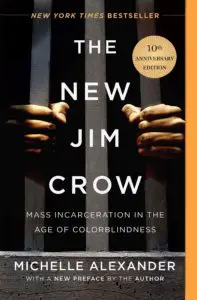
Seldom does a book have the impact of Michelle Alexander’s The New Jim Crow. Since it was first published in 2010, it has been cited in judicial decisions and has been adopted in campus-wide and community-wide reads; it helped inspire the creation of the Marshall Project and the new $100 million Art for Justice Fund; it has been the winner of numerous prizes, including the prestigious NAACP Image Award; and it has spent nearly 250 weeks on the New York Times bestseller list.
Bill says, “Like many white people, I’ve tried to deepen my understanding of systemic racism in recent months. Alexander’s book offers an eye-opening look into how the criminal justice system unfairly targets communities of color, and especially Black communities. It’s especially good at explaining the history and the numbers behind mass incarceration. I was familiar with some of the data, but Alexander really helps put it in context. I finished the book more convinced than ever that we need a more just approach to sentencing and more investment in communities of color.”
Range: Why Generalists Triumph in a Specialized World, by David Epstein.
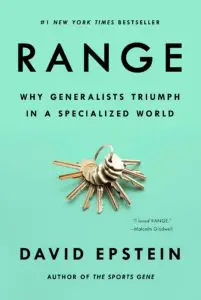
Provocative, rigorous, and engrossing, Range makes a compelling case for actively cultivating inefficiency. Failing a test is the best way to learn. Frequent quitters end up with the most fulfilling careers. The most impactful inventors cross domains rather than deepening their knowledge in a single area. As experts silo themselves further while computers master more of the skills once reserved for highly focused humans, people who think broadly and embrace diverse experiences and perspectives will increasingly thrive.
Bill says, “In this fascinating book, he argues that although the world seems to demand more and more specialization—in your career, for example—what we actually need is more people “who start broad and embrace diverse experiences and perspectives while they progress.” His examples run from Roger Federer to Charles Darwin to Cold War-era experts on Soviet affairs. I think his ideas even help explain some of Microsoft’s success, because we hired people who had real breadth within their field and across domains. If you’re a generalist who has ever felt overshadowed by your specialist colleagues, this book is for you.”
The Splendid and the Vile: A Saga of Churchill, Family, and Defiance During the Blitz, by Erik Larson.
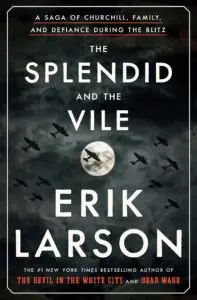
In The Splendid and the Vile, Erik Larson shows, in cinematic detail, how Churchill taught the British people “the art of being fearless.” It is a story of political brinkmanship, but it’s also an intimate domestic drama, set against the backdrop of Churchill’s prime-ministerial country home, Chequers; his wartime retreat, Ditchley, where he and his entourage go when the moon is brightest and the bombing threat is highest; and of course 10 Downing Street in London. Drawing on diaries, original archival documents, and once-secret intelligence reports—some released only recently—Larson provides a new lens on London’s darkest year through the day-to-day experience of Churchill and his family: his wife, Clementine; their youngest daughter, Mary, who chafes against her parents’ wartime protectiveness; their son, Randolph, and his beautiful, unhappy wife, Pamela; Pamela’s illicit lover, a dashing American emissary; and the advisers in Churchill’s “Secret Circle,” to whom he turns in the hardest moments.
Bill says, “Sometimes history books end up feeling more relevant than their authors could have imagined. That’s the case with this brilliant account of the years 1940 and 1941, when English citizens spent almost every night huddled in basements and Tube stations as Germany tried to bomb them into submission. The fear and anxiety they felt—while much more severe than what we’re experiencing with COVID-19—sounded familiar. Larson gives you a vivid sense of what life was like for average citizens during this awful period, and he does a great job profiling some of the British leaders who saw them through the crisis, including Winston Churchill and his close advisers. Its scope is too narrow to be the only book you ever read on World War II, but it’s a great addition to the literature focused on that tragic period.”
The Spy and the Traitor: The Greatest Espionage Story of the Cold War, by Ben Macintyre.
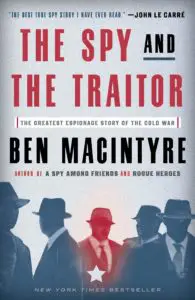
Unfolding the delicious three-way gamesmanship between America, Britain, and the Soviet Union, and culminating in the gripping cinematic beat-by-beat of Gordievsky’s nail-biting escape from Moscow in 1985, Ben Macintyre’s latest may be his best yet. Like the greatest novels of John le Carré, it brings readers deep into a world of treachery and betrayal, where the lines bleed between the personal and the professional, and one man’s hatred of communism has the power to change the future of nations.
Bill says, “This nonfiction account focuses on Oleg Gordievsky, a KGB officer who became a double agent for the British, and Aldrich Ames, the American turncoat who likely betrayed him. Macintyre’s retelling of their stories comes not only from Western sources (including Gordievsky himself) but also from the Russian perspective. It’s every bit as exciting as my favorite spy novels.”
Breath from Salt: A Deadly Genetic Disease, a New Era in Science, and the Patients and Families Who Changed Medicine, by Bijal P. Trivedi.
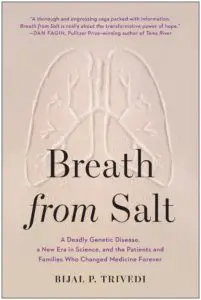
Told from the perspectives of the patients, families, physicians, scientists, and philanthropists fighting on the front lines, Breath from Salt is a remarkable story of unlikely scientific and medical firsts, of setbacks and successes, of people who refused to give up hope, and a fascinating peek into the future of genetics and medicine.
Bill says, “This book is truly uplifting. It documents a story of remarkable scientific innovation and how it has improved the lives of almost all cystic fibrosis patients and their families. This story is especially meaningful to me because I know families who’ve benefited from the new medicines described in this book. I suspect we’ll see many more books like this in the coming years, as biomedical miracles emerge from labs at an ever-greater pace.”
Having read “Range,” I am determined to finish the other four books recommended by Bill Gates on this list before the year ends. What do you think of this list? Let me know in the comments below!