


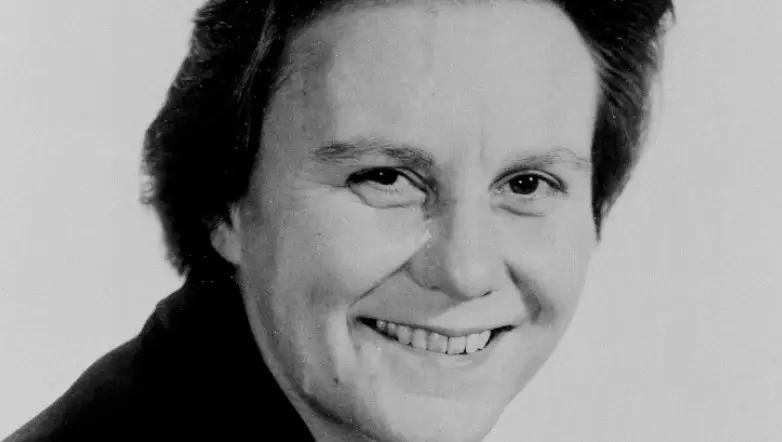
Ninety-four years ago, Harper Lee was born. Her debut, To Kill a Mockingbird, is one of the most popular literary classics to date, a book you’ve likely studied in high school or college lectures. Today we remember Harper Lee, and her 1960 masterpiece, with eleven lesser-known facts about her life.
1. She joined a sorority in college.
Harper Lee may not be the first person to come to mind when you think “sorority girl,” but she was, in fact, a member of Chi Omega when she attended the University of Alabama. I envy whoever got to party with her back in the day!
2. Her real name is Nelle Harper Lee.
Nelle is actually a backwards spelling of Lee’s grandmother, Ellen. Once she began to pursue writing, she dropped her first name and started going by Harper Lee, for fear that people might mispronounce her name or start calling her “Nellie.” Honestly, same.
3. She dropped out of law school.
For anyone looking to change career paths, perhaps terrified to tell their parents, just look at the success Harper Lee achieved after dropping out of school! Lee was accepted to law school in her junior year of college, where she was allowed to begin her law degree as an undergraduate. But after a year in the program, Lee decided to change gears and focus on writing instead.
4. She began her writing career with a little help from her friends.
After moving to the Big Apple at twenty-three, Lee met Michael Martin Brown and his wife, Joy, who gave her a rather generous Christmas gift: to support her for a year while she pursued her writing career full time. They also helped her find an agent, who would later get Lee a publisher interested in her work. Talk about good friends!
5. Her most recent work was met with controversy.
Go Set a Watchman was originally written before To Kill a Mockingbird. Instead of publishing it, Lee’s publisher told her to write from the perspective of her main character, Scout, as a child–a suggestion that birthed Lee’s popular classic. In 2015, it was announced that Harper Collins would be publishing the original manuscript, leading to speculation that Lee had been coerced into signing off on it. When Go Set a Watchman was finally released in July 2015, readers were stunned to discover that Atticus Finch–Scout’s beloved father–was a racist in the new work, taking place two decades after the events of To Kill a Mockingbird.
6. She injured her hand in 1965.
Lee burned her right hand after a kitchen mishap in 1965, making it difficult for her to write or type. This was quickly remedied with an operation.
7. She worked on a nonfiction manuscript that never got published.
Called The Reverend–a working title–Lee’s unpublished work is supposedly about a serial killer from Alabama. I’m intrigued already!
8. She was very close with her sister.
Alice Finch Lee was a lawyer in the 1940s, back when few women practiced law. Harper often called her “Atticus in a skirt.” Alice was also in charge of her sister’s legal and financial affairs, and remained a close confidante over the course of their lifetimes.
9. Her estate sued the Broadway adaptation after her death.
Those from Harper Lee’s estate sued the producers of the Broadway adaptation of To Kill a Mockingbird, accusing its writers of deviating too much from the original book. The lawsuit was filed by Lee’s lawyer, Tonja Carter, who emphasized the importance of staying true to Lee’s vision for her novel. After the play producers countersued, both parties ultimately settled. The play was able to give its black characters greater voices, while altering its portrayal of Atticus so that it aligned more with the book.
10. She was childhood friends with Truman Capote.
As the author of Breakfast at Tiffany’s, you’ve probably heard of Truman Capote. He is also Lee’s childhood friend and the inspiration behind Dill in To Kill a Mockingbird. Lee and Capote remained friends through adulthood; Lee even helped Capote with his 1966 nonfiction work, In Cold Blood.
11. She was awarded the Presidential Medal of Freedom.
In 2007, President George W. Bush presented Lee with the Presidential Medal of Freedom for her contribution to American literature. As one of the most revered authors of all time, she certainly deserved it!
Featured Image via time